The New Currency of Workforce Readiness
In a world shaped by generative AI, hiring for readiness—not résumés—will define who wins.
The drumbeat of technological change is relentless. Artificial Intelligence—especially Generative AI (GenAI)—is transforming how we work, learn, and lead. This isn’t a distant prospect; it’s already reshaping industries with an intensity rivalling the Industrial and Digital Revolutions. In this new reality, Workforce Readiness has become the defining factor that determines which organisations adapt, thrive, or fall behind.
The real question for leaders today isn’t how to fill jobs but how to ensure the workforce is truly ready for what’s next. In my experience, the answer lies in integrating modern learning trends into the very fabric of recruitment. Workforce readiness is no longer a human capital aspiration; it’s an economic imperative.
The Acceleration Imperative: Why Workforce Readiness Can’t Wait
AI is creating opportunity at record speed—but only for those equipped to harness it.
The 2025 employment landscape is defined by unprecedented dynamism. As AI, robotics, and automation converge, they’re not just reshaping jobs —they’re redefining value. The potential economic uplift from AI is estimated at $15.7 trillion by 2030, but realising that promise depends on one thing: how ready people are to work alongside intelligent machines.
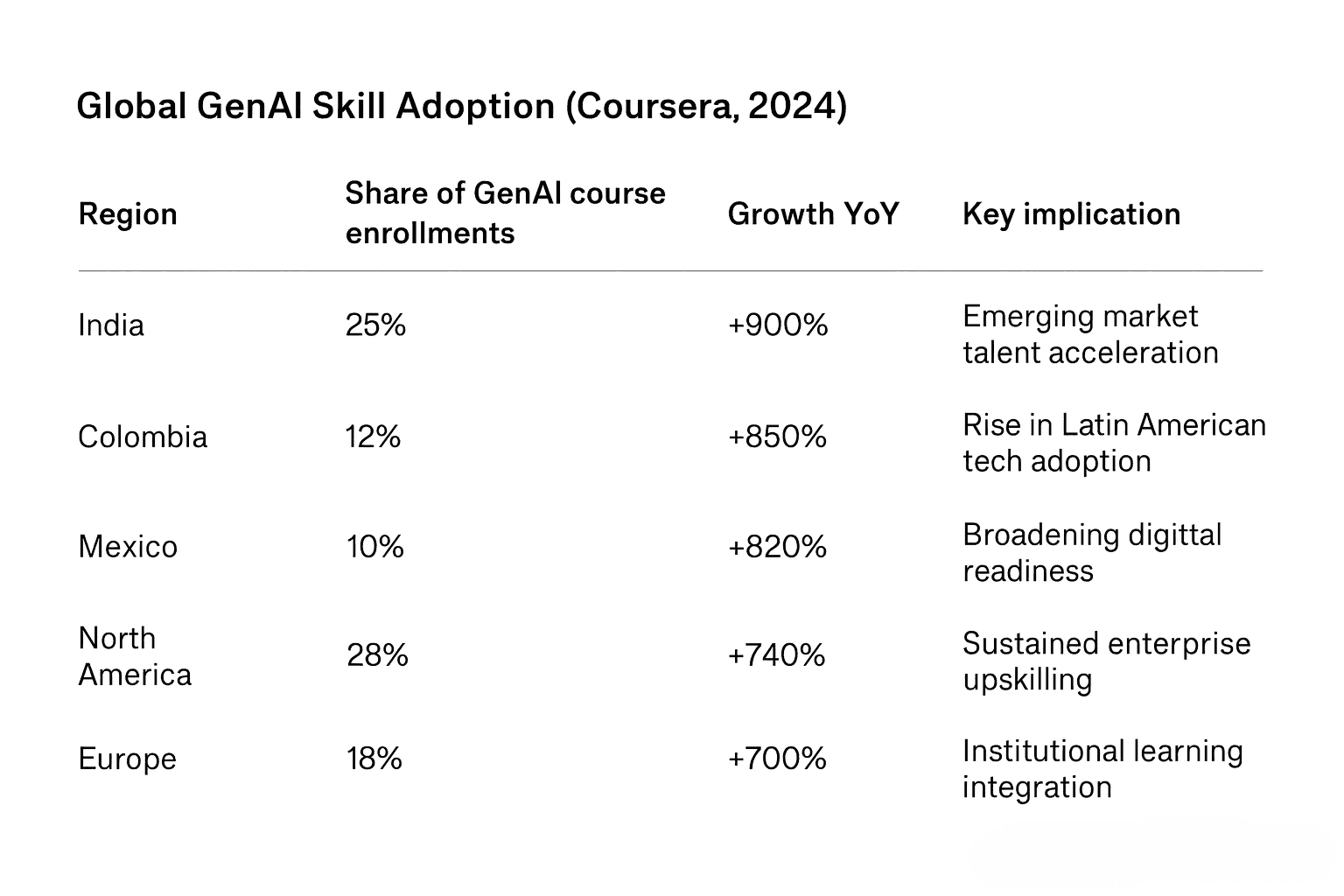
According to Coursera, GenAI has become the fastest-growing skill among enterprise learners, showing an 866% year-over-year spike in course enrollments. This isn’t limited to Silicon Valley—half of these learners are in emerging economies like India, Colombia, and Mexico.
That global diffusion signals a power shift: talent globalisation through learning. Readiness now transcends geography.
The Learning Revolution: How Skill Trends Are Redefining Readiness
The skills defining workforce readiness in 2025 blend technology, risk literacy, and communication mastery.
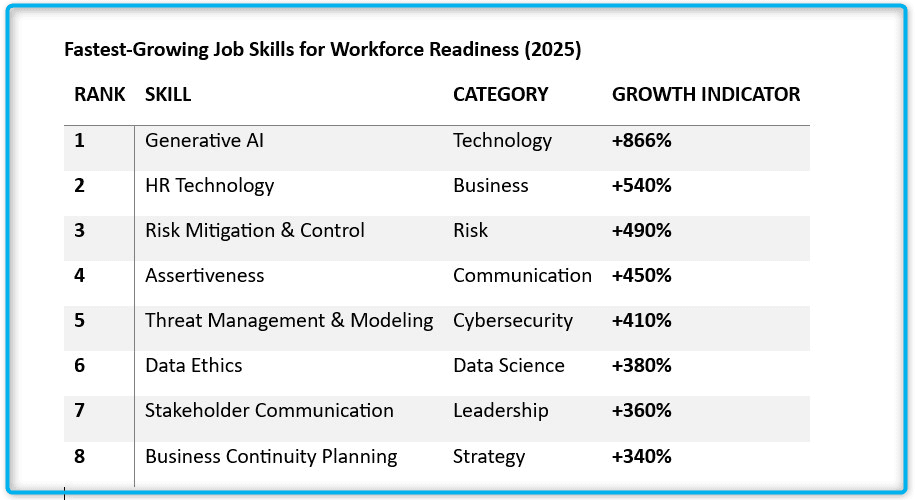
Coursera’s data paints a revealing picture of what readiness looks like. The top skills of 2025 are led by Generative AI, followed by HR technology, risk mitigation and control, assertiveness, and threat management.
Beyond those, emerging must-haves include incident management, stakeholder communication, and data ethics—a mix that captures both the digital and human sides of the future workplace.
Fastest-Growing Job Skills for Workforce Readiness (2025)
What fascinates me most is the divergence between learner groups:
- Employees seek productivity and innovation—taking courses like “Generative AI for Everyone.”
- Students focus on theoretical AI foundations, preparing for long-term technical careers.
- Job seekers chase applied machine learning and reinforcement learning to meet immediate job-market demand.
Different paths, same goal: readiness.
From Learning to Hiring: Integrating Skill Signals into Recruitment
The smartest companies now hire for potential, not pedigree.
This is where the readiness revolution meets recruitment strategy. Traditional hiring models—based on credentials and past experience—are giving way to skills-based hiring and learning agility assessments.
By 2030, 48% of employers plan to use direct skills assessments, compared to 43% still requiring degrees. This signals a decisive shift toward evaluating what people can do rather than what they’ve done.
Organisations that embed learning trends into hiring gain a sharper lens on future performance. Here’s how leaders are operationalising that shift:
- Skills-Based Hiring: Dropping degree requirements to evaluate candidates by demonstrated skills. Adoption rates already exceed 30% in India and 34% in South Africa—well above the global average.
- Evaluating Learning Mindset: Asking candidates what they’ve learned lately—through courses, projects, or certifications—signals readiness and adaptability.
- Targeted Recruitment by Skill Trend: Actively sourcing for high-growth areas like GenAI, cybersecurity, and data ethics.
- Learning Platform Partnerships: Collaborating with providers like Coursera to map skill trends and identify talent pipelines early.
This alignment transforms recruitment from a static process into a living readiness ecosystem.
Overcoming Barriers: Closing the Workforce Readiness Gap
Readiness demands culture change, not just training budgets.
Despite progress, many organisations face the same obstacles: skills gaps, resistance to change, and limited investment. Globally, leaders are tackling these through four major strategies—reskilling, targeted hiring, DEI expansion, and cross-border mobility.
Regional Workforce Readiness Strategies by 203
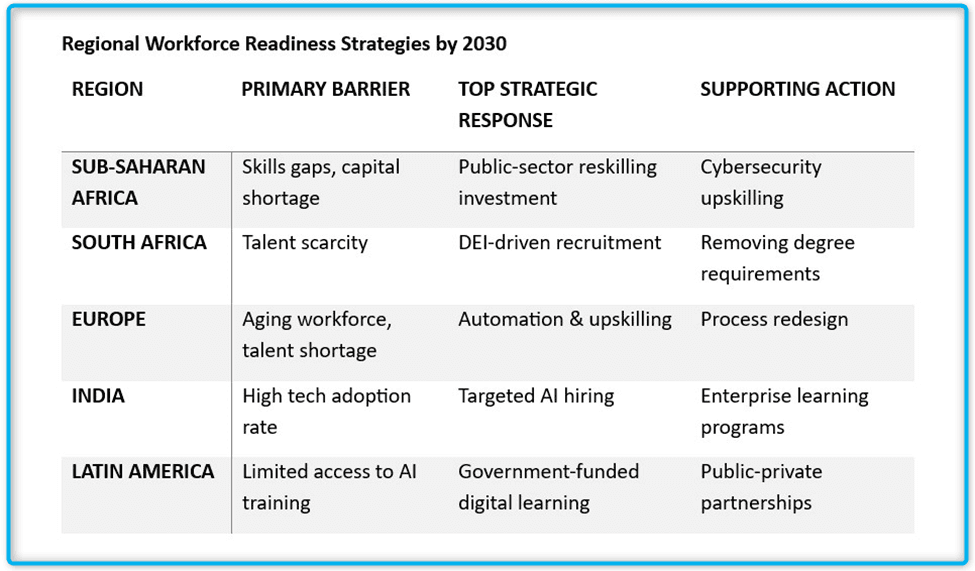
No two regions face identical readiness challenges—but all share one truth: culture eats strategy when learning stops.
To thrive, organisations must normalise upskilling as part of work itself, not as a remedial fix.
Human + Machine: The Future Frontier of Workforce Readiness
AI won’t replace people—but people who embrace AI will replace those who don’t.
The future of hiring lies at the intersection of human capability and machine intelligence. GenAI will augment far more jobs than it replaces, but this augmentation demands new literacy.
Employers are already investing in prompt-writing and AI collaboration skills—areas where human creativity and contextual reasoning remain irreplaceable.
In my opinion, the most valuable workers of the next decade will be hybrids: analytically strong, emotionally intelligent, and endlessly curious.
Human vs. AI-Resilient Skills for Workforce Readiness
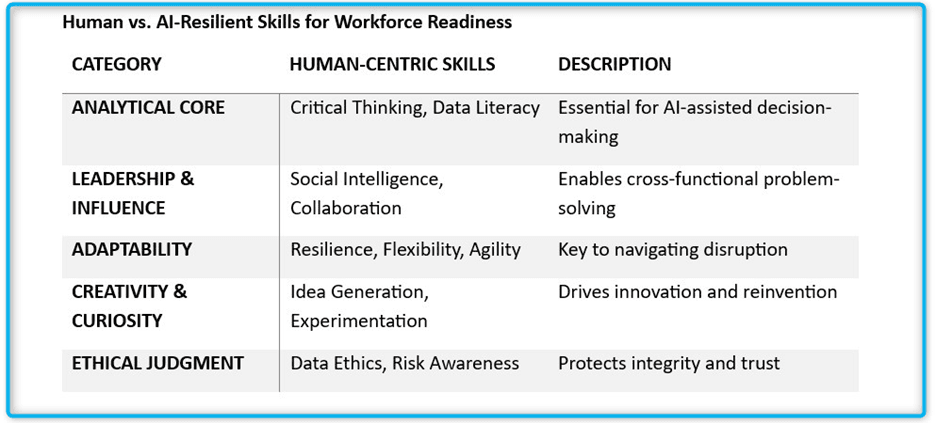
These skills are the connective tissue of workforce readiness—the traits AI can’t mimic but depends on to succeed.
Here’s What I Think
The divide between learning and hiring is collapsing—and that’s a good thing.
In my experience, the future belongs to organisations that stop hiring just for talent and start hiring for learning. Tomorrow’s most valuable employees won’t just fit a role—they’ll grow it.
That’s why I believe in reimagining hiring through what I call “Learn-to-Earn” interviews. Instead of traditional Q&A, candidates could complete short, role-relevant learning modules—say, a 90-minute course on prompt engineering or data ethics—and present what they learned. Their curiosity, adaptability, and speed of insight become part of the evaluation.
I also advocate for Reverse Mentoring programs focused on AI literacy—where digital natives mentor senior leaders on emerging tools. This bridges generations and accelerates readiness.
Ultimately, workforce readiness isn’t a one-time goal. It’s a living capability—a measure of how fast organisations learn, unlearn, and evolve.
Recruitment, in that context, becomes not just about filling roles but about building resilience.
And in a world where AI is rewriting every playbook, resilience is the only skill that never goes out of date.
Sources of Insights
- World Economic Forum. (2025). The Future of Jobs Report 2025.
- The Global Skills Report – Coursera

Ajay Dhage is a seasoned talent acquisition leader with over 20 years of experience in Talent Acquisition and Workforce Strategy across the oil and gas, EPC, and renewables sectors. As Talent Acquisition Lead for a global Oil & Gas EPC company in India, he manages the end-to-end hiring lifecycle for complex, multi-disciplinary projects, from sourcing and assessment to onboarding and workforce planning. Known for his customer-focused approach and innovative use of AI and data in hiring, Ajay focuses on building future-ready workforces and resilient leadership pipelines. Through ajayable.com, he shares insights, trends, and practical frameworks to help HR professionals, organisations, and recruiters excel in a rapidly evolving, competitive talent landscape.
Leave a Reply