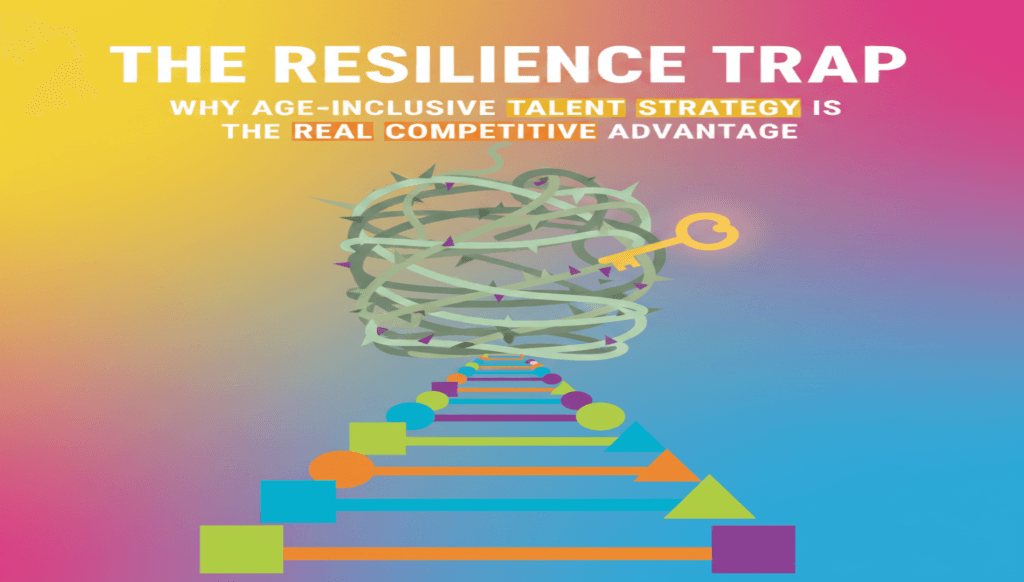
Organisations across India speak fluently about speed, agility, and reinvention. Yet in the rush towards leaner structures, many leaders are making a quiet, costly error. An age-inclusive talent strategy is being sacrificed in favour of short-term cost optics. I believe this decision sits at the centre of a growing resilience gap, one that few boards are prepared to name.
What looks like modernisation often hides a deeper fragility. By sidelining professionals over 40, firms are draining the very judgment required to operate through volatility. Experience is not being replaced. It is being removed.
When Agility Becomes Fragile: The Hidden Risk Inside Today’s Talent Strategy
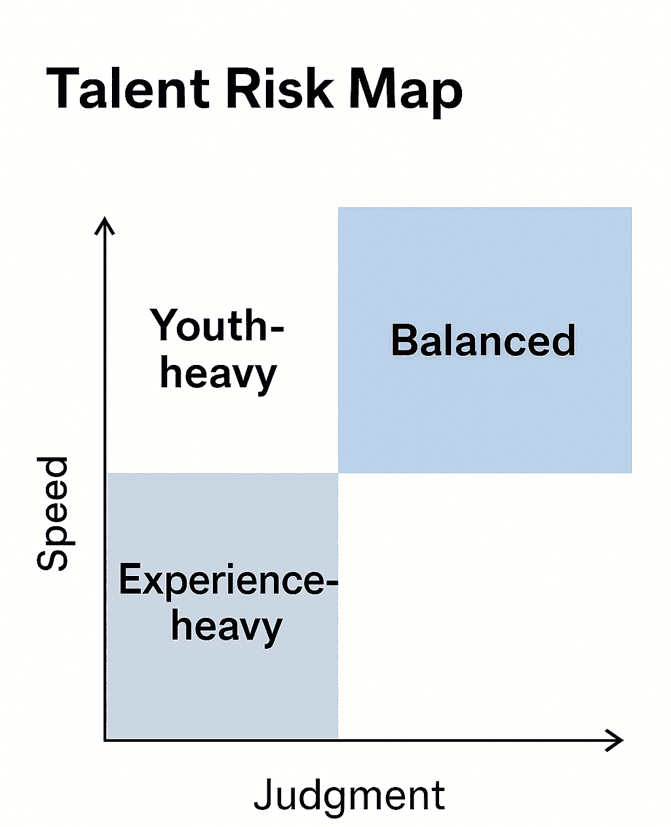
Speed without judgment scales mistakes.
For decades, corporate careers followed a clear arc. The 40s marked professional authority. Influence widened. Judgment matured. Today, that stage has become a pressure point.
In the pursuit of agility, organisations are dismantling stabilising layers of experience. Youth is equated with adaptability. Tenure is reframed as rigidity. An age-inclusive talent strategy gives way to a narrow reading of efficiency.
The paradox is hard to ignore. Firms chase flexibility while stripping out the people who understand how systems break. What remains moves fast, but lacks ballast.
Trading Capability for Cost: How Age-Inclusive Talent Strategy Gets Undermined
Short-term savings create long-term exposure.
Recruiters rarely say this out loud, but the bias is familiar. Candidates in their late 20s and early 30s cost less.They negotiate less. They fit cleanly into predefined bands. Experience, by contrast, appears expensive.
This thinking has produced a growing grey zone of talent. Professionals with deep capability sit outside high-potential pipelines yet remain years away from CXO roles. They want to contribute. The market has decided otherwise.
In my experience, organisations treating experience as overhead reduce payroll today while eroding resilience tomorrow. An age-inclusive talent strategy reframes experience as compounding value, not sunk cost.
The Data No One Can Ignore: Age-Inclusive Talent Strategy Under Pressure
Bias is no longer anecdotal.
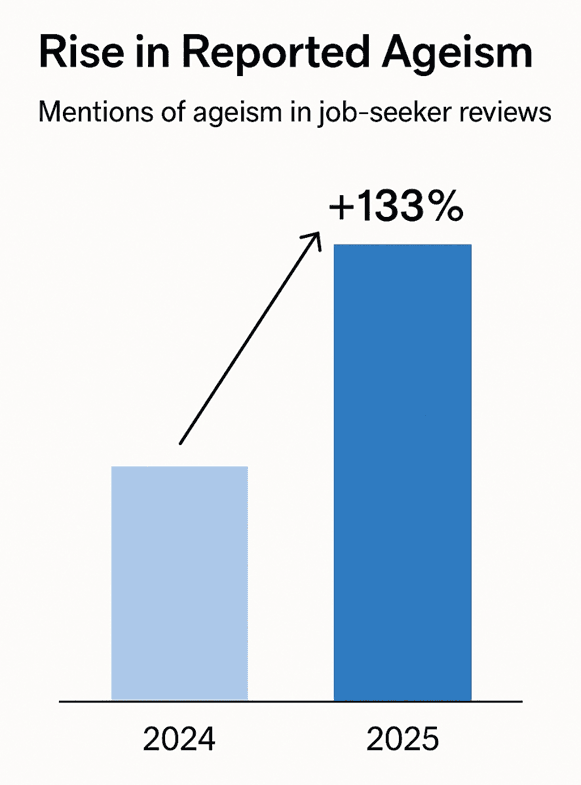
Evidence now backs what professionals have felt for years. Job-seeker reviews show a 133 per cent year-on-year rise in ageism mentions in Q1 2025. Candidates over 40 report longer job searches and repeated objections around salary alignment and adaptability.
Automation amplifies this bias. Senior titles, longer tenures, and historical pay bands trigger invisible filters before human review begins. Language does the rest.
“We need fresh energy.”
“This role needs someone more agile.”
“You look overqualified.”
In India, age discrimination ranks as the top stated DEI concern for 2025, yet reporting remains rare. An age-inclusive talent strategy exists on paper. Practice tells another story.
Judgment Versus Speed: What Age-Inclusive Talent Strategy Protects
You hire execution. Judgment accumulates.
Leaders often confuse speed with agility. Ashish Dhawan captures the gap succinctly. Companies mistake theory for capability. Younger teams execute fast. They lack scars.
When experienced professionals exit, institutional memory leaves with them. Teams repeat errors already solved. Momentum replaces direction.
The risks compound quickly:
- Leadership pipelines weaken.
- Crisis response slows.
- People management suffers.
You can hire speed. Judgment resists acceleration. An age-inclusive talent strategy preserves both.
Why Age-Inclusive Talent Strategy Plays Out Differently by Industry
Context decides value.
Age bias does not land evenly.
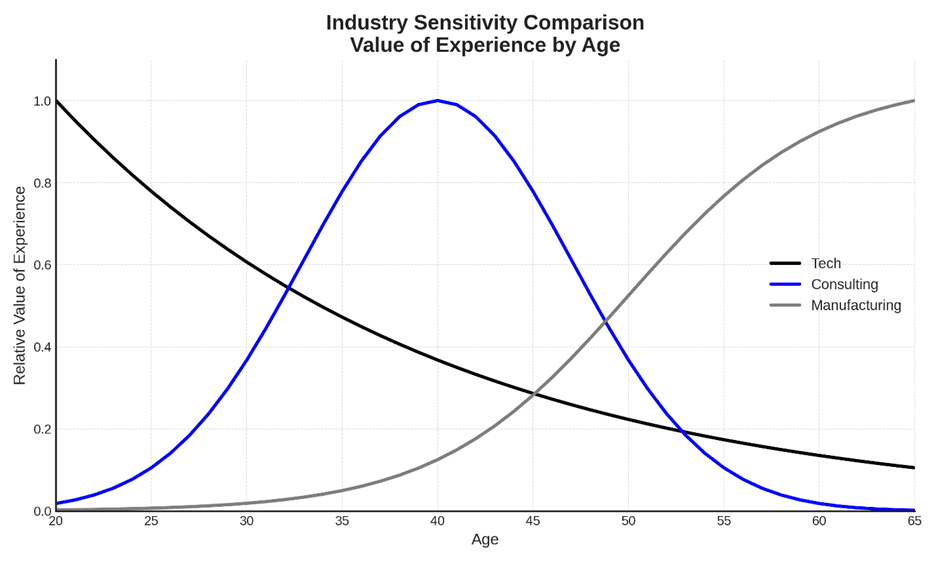
New-age tech firms prize flat structures and relentless output. Youth aligns with long hours and lower fixed costs. The model defends rapid scaling.
Professional services tell a different story. Forty marks peak credibility. Clients trust judgment earned through exposure.
Traditional manufacturing still values grey hair. Operational complexity demands lived experience.
The irony remains striking. Organisations struggling most with execution failures are often those sidelining the cohort best equipped to fix them.
Designing Systems Where Experience Compounds
Age-inclusive talent strategy requires architecture, not slogans.
Leaders serious about resilience must treat age diversity as operating logic.
Shift from success to significance.
Senior talent should move from ladder climbing to contribution. Mentorship, oversight, and institutional transfer deserve formal roles.
Create second-act pathways.
Over 60 per cent of professionals now seek role adaptability. Internal redeployment retains capability without forced exits.
Adopt the CEO-of-life mindset.
Veterans such as Sanjay Mudnaney offer direct advice. Do not wait. Build brand, learning velocity, and networks early. Security follows relevance.
An age-inclusive talent strategy is effective only when individuals and systems are aligned.
Here’s What I Think
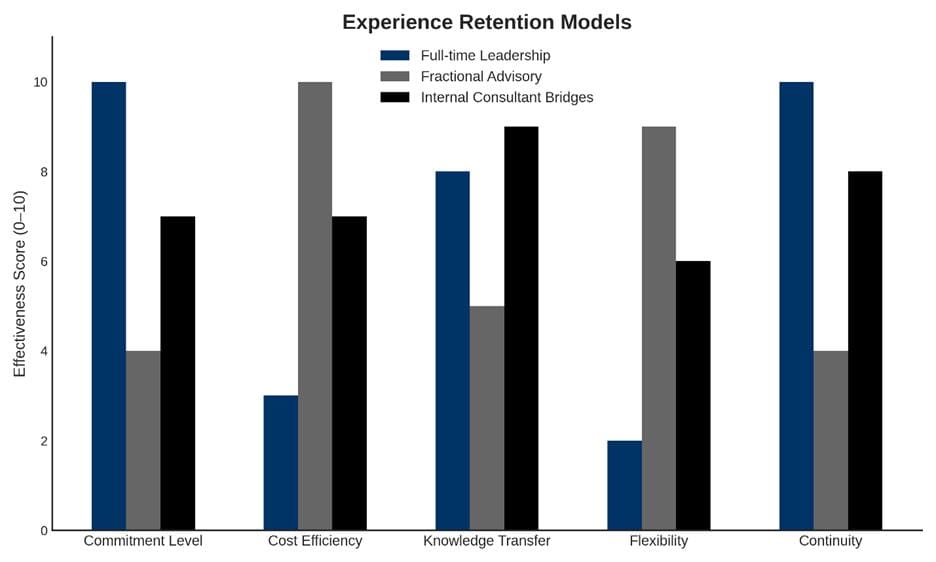
The permanent executive role is eroding. Over the next many months, the top tier of displaced senior talent will not return full-time. They will operate as fractional judgment leaders.
Firms cannot afford to pay a full salary. They cannot survive a quarter without a crisis-tested perspective. Judgment-as-a-service becomes the compromise.
Invert the hiring funnel. Stop hiring for potential. Hire for failure.
The safe hire looks clean. The dangerous hire carries history. Organisations win through people who know how things collapse. Beyond the resume, your hiring approach is failing you.
Embed grey hair inside fast teams. Not above them. Inside them. Strategy anchors prevent expensive circles.
Tomorrow morning:
- Audit recruitment AI. Review the last 50 profiles rejected as overqualified. Interview them for shadow advisory roles.
- End retirement talk. Introduce phase-two contracts. Offer 24-month internal consultant bridges to protect institutional memory.
The youth dividend collapses without experience insurance. Stop buying engines. Invest in navigators.

Ajay Dhage is a seasoned talent acquisition leader with over 20 years of experience in Talent Acquisition and Workforce Strategy across the oil and gas, EPC, and renewables sectors. As Talent Acquisition Lead for a global Oil & Gas EPC company in India, he manages the end-to-end hiring lifecycle for complex, multi-disciplinary projects, from sourcing and assessment to onboarding and workforce planning. Known for his customer-focused approach and innovative use of AI and data in hiring, Ajay focuses on building future-ready workforces and resilient leadership pipelines. Through ajayable.com, he shares insights, trends, and practical frameworks to help HR professionals, organisations, and recruiters excel in a rapidly evolving, competitive talent landscape.
Leave a Reply