• Skip to primary navigation
  • Skip to main content
  • Skip to primary sidebar
  • Privacy Policy
  • Terms and Conditions
  • Contact

ajayable

Your Guide to Smarter Hiring and HR Excellence.

  • Home
  • Discover Talent Trends
    • Recruitment Market Trends
    • Talent Acquisition Strategies
    • AI & Automation in Recruitment
    • Technical HR
    • Leadership & Workforce Strategy
    • Career Development for HR Professionals
  • Trending Insights
    • Global Hiring Trends: Seizing Opportunities for Workforce Evolution
    • Navigating the Recruitment Frontier: Top Talent Trends Shaping 2025 and Beyond.
    • AI in Talent Acquisition: Revolutionizing Recruitment for 2025 and Beyond.
    • Beyond the Cubicle: The Future of Work is Flexible
    • AI in HR: A Strategic Framework for Digital Transformation.
  • About Ajay
Home » Industry Trends

Industry Trends

Skilled Trades Innovators: The Great Career Pivot and What Leaders Must Do Next

November 18, 2025 by ajay dhage Leave a Comment

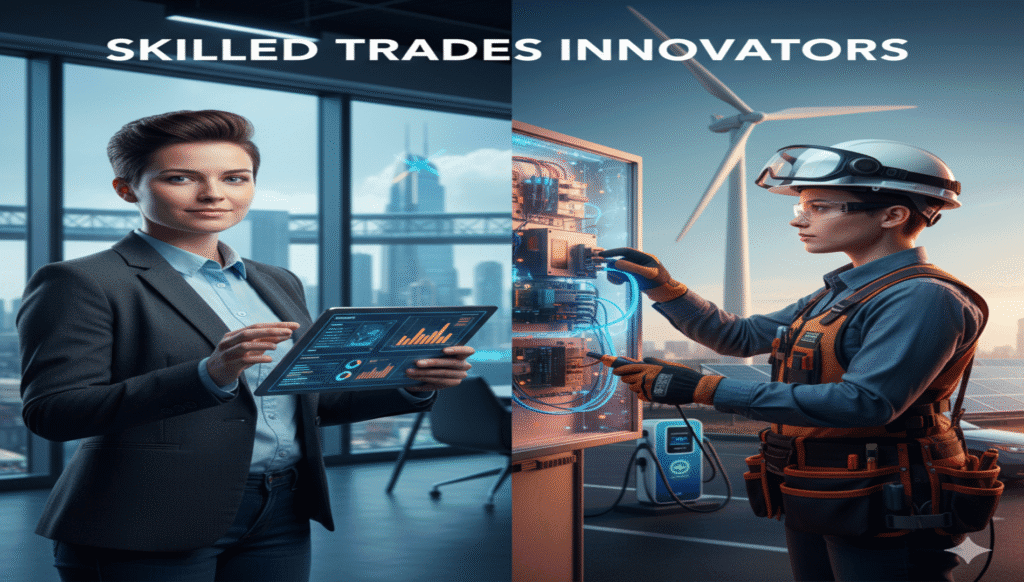
Skilled Trades Innovators

The foundations of the global labour market have shifted. Today, a growing number of college-educated young adults are abandoning the assumed straight line from degree to desk and choosing skilled trades instead. That choice is not a retreat. It is a strategic recalibration driven by economic pressure, automation anxiety, and the realisation that hands-on, high-skill work often resists replacement by software. I believe this movement marks the rise of a new class of professionals — Skilled Trades Innovators — and it demands a strategic response from leaders and organisations.

The Strategic Career Pivot

A structural, not cyclical, reordering of career expectations driven by risk, debt, and durable value.

For decades, the professional script was simple. A college degree promised upward mobility and white-collar stability. That script is fraying. Recent data show 37 per cent of Gen Z college graduates are now working in or actively pursuing blue-collar roles. That figure is not anecdotal. It is the signal of a large-scale reallocation of human capital toward roles perceived as resilient to automation and immediately in earning potential.

This pivot is rational. Graduates face heavy debt burdens, a sluggish entry-level job market, and a technology wave that can hollow out clerical and standardised knowledge work. The decision to pivot into trades is a hedged bet. It trades uncertain returns on a degree for paid apprenticeships, a faster path to income, and what many graduates see as work that will remain necessary regardless of algorithmic progress.

Skilled Trades Innovators and the AI Calculus

Young professionals are choosing roles where cognition meets craft because those roles are harder to automate.

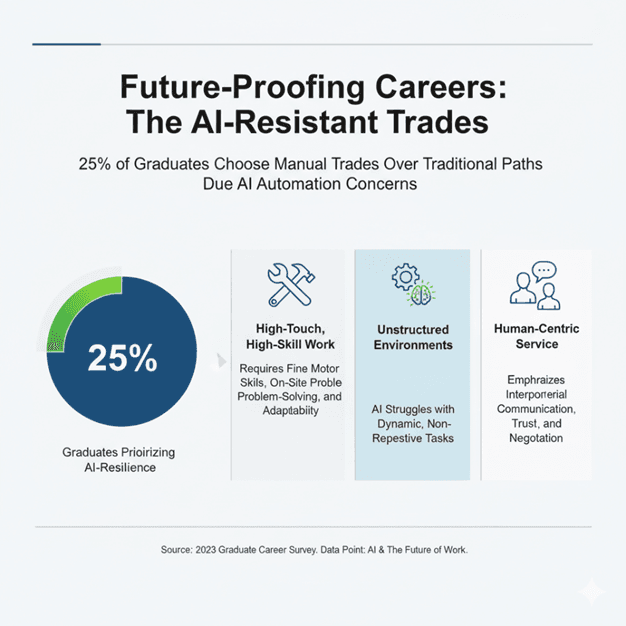
Generative AI and automation have changed how entrants assess career risk. Roughly one quarter of graduates entering trades cite AI resilience as a key reason for their choice. Organisations across industries already anticipate major transformation. One study notes that 41 percent of organisations expect to reduce their workforce before 2030 as a result of automation. Employers predict that AI and information processing technologies will transform most operations within a few years. These expectations shape risk perception for a generation steeped in digital fluency.

Put simply, AI is exceptionally good at pattern recognition, optimisation, and repeatable cognitive tasks. It struggles in non-standard physical environments where human judgement, real-time improvisation, and manual problem-solving matter. Wiring a house, diagnosing a machine in an unpredictable setting, or adapting to on-site anomalies are tasks where human skill remains essential. Skilled Trades Innovators combine cognitive skills with situational dexterity. That mix makes them hard to replace.
Future Proofing Careers

Economics That Explain the Shift

Debt, earnings reality, and immediate paid training make trades a rational financial choice.

Financial calculus drives behaviour. The average student loan debt is over $38,000. For many graduates, the return on a degree is uncertain. Study reports that 19 percent of graduates shifted to blue-collar work because they could not find roles in their field, 16 percent because they were not earning enough, and another 16 percent because their degree did not lead to the expected career. Paid apprenticeships invert the traditional investment model. They offer on-the-job income from day one and reduce dependence on loans.

Wages in skilled trades are better than the stereotype implies. Experienced electricians, plumbers, and HVAC technicians report median wages in the $60,000 to $80,000 range. Top performers often surpass six figures. When you factor in job security, fewer debts, and clear progression to entrepreneurship or business ownership, the long-term financial narrative for trades is compelling.
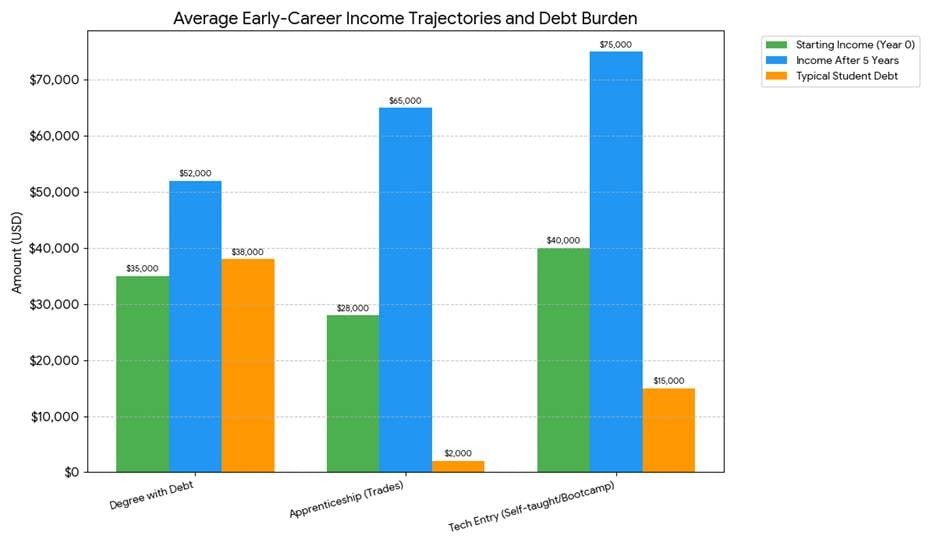
Skilled Trades Innovators-Average Early Career Income Trajectory and Debt Burden

Skilled Trades Innovators: High-Tech, High-Touch Work

Modern trades are cognitive workzones where analytical skill and hands-on capability converge.

A persistent misperception is that blue-collar work equals low-tech labour. The reverse is true in many growth areas. Manufacturing uses advanced robotics and machine vision. Electricians integrate smart building systems. Solar and wind technicians work with power electronics and grid software. The tradecraft of 2025 demands analytical thinking, systems literacy, and the ability to manage automation. The World Economic Forum data lists analytical thinking, resilience, leadership, and creative thinking among the most valued skills. Those are the exact capabilities college education cultivates. A graduate who understands systems thinking and can apply it to physical infrastructure becomes a multiplier in any trade setting.
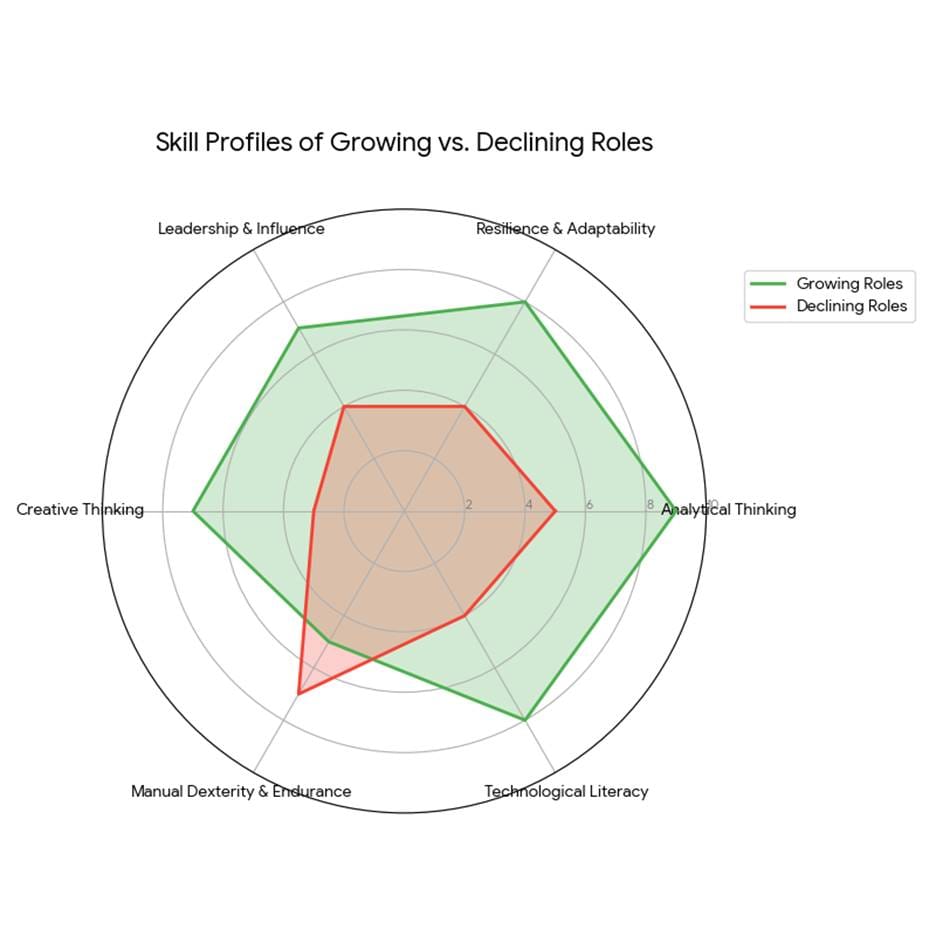
Skilled Trades Innovators-Skill Profiles of Growing vs Declining Roles

Skilled Trades Innovators and the Green Transition

Decarbonisation creates durable demand for trade skills tied to new infrastructure.

Energy transition and climate adaptation are structural demand drivers. Nearly half of surveyed employers anticipate emissions reduction efforts will be a major driver of organisational transformation. Investments in climate adaptation are close behind. Those priorities create demand for roles like renewable energy technicians, electric vehicle specialists, and environmental engineers. These roles require practical installation and maintenance skills plus the ability to engage with digital monitoring systems and smart grids. Skilled Trades Innovators who acquire green specialisations will find exceptional wage growth and mobility.
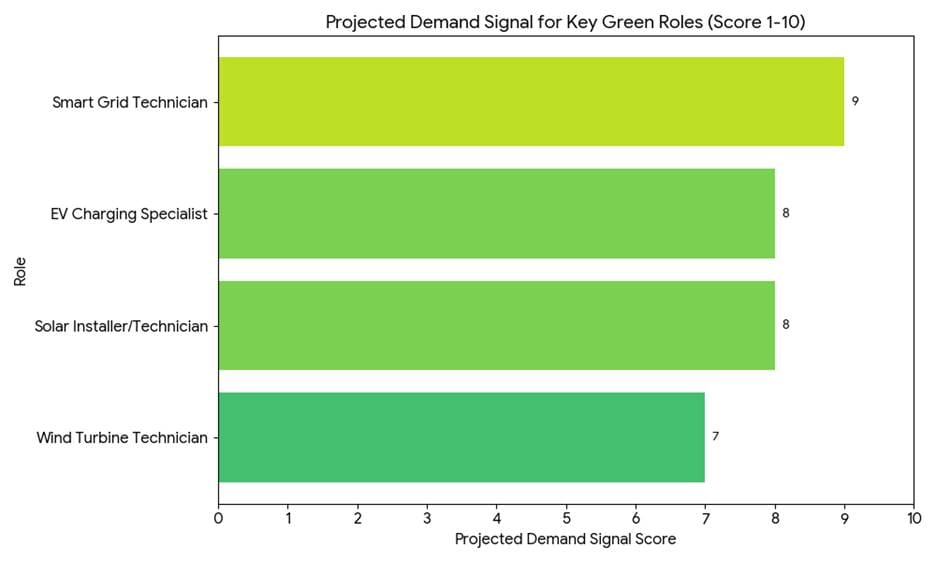
Skilled Trades Innovators-Projected for Key Green Roles

Skilled Trades Innovators in a Churning Global Market

Structural labour-market churn plus weak entry-level hiring make trades an attractive, available path.

Global labour markets are in flux. Youth unemployment is markedly higher than aggregate unemployment in many regions. Youth unemployment rates such as 10.8 percent in the United States and substantially higher rates in several emerging economies. Employers report that structural changes will affect a significant share of jobs by 2030, and yet they also forecast the creation of millions of new roles during this transition. In this context, trades offer immediate opportunity and a more predictable route to stable income. For employers, this is a chance to tap a resilient talent pool that other firms overlook.
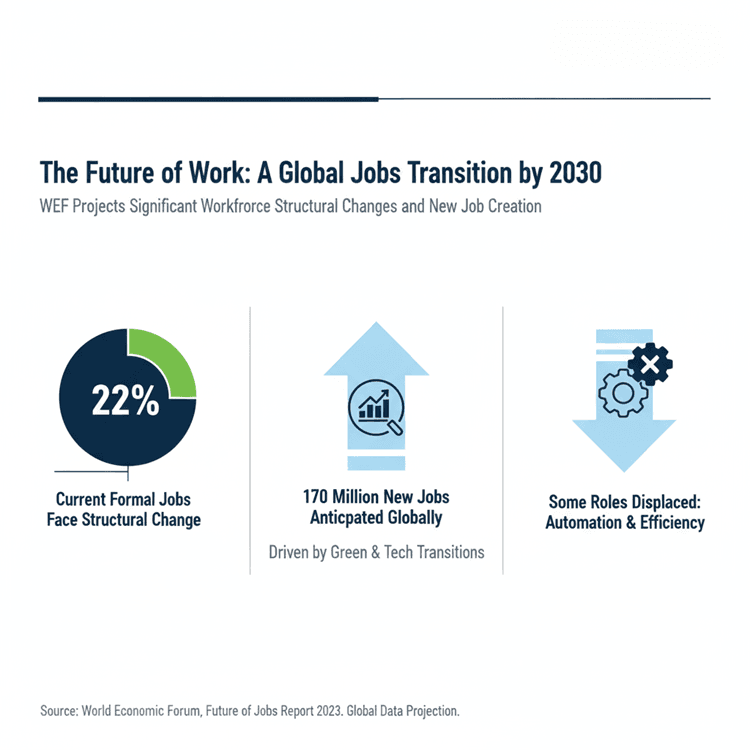
Global Jobs Transition by 2030

How Employers Can Win Skilled Trades Innovators

Companies that reframe trades as innovation careers will secure a competitive advantage in talent and operations.

Leaders must stop treating the trades as a labour reserve and start treating them as strategic talent channels. That requires three tactical shifts.

  1. Design College-Graduate Apprenticeships. Create structured programs that respect the analytical background of graduates and accelerate pathway timelines. Offer leadership modules, technical certifications, and rapid role rotations. Show career maps that lead to foreman, project manager, and business owner roles.
  2. Offer Financial Incentives that Address Debt. Tuition assistance for certification, sign-on bonuses, and transparent pay bands make the total compensation proposition clear and competitive versus a debt-laden degree path.
  3. Adopt Skills-First Hiring. Reduce reliance on degree checkboxes and emphasise demonstrated competencies. Research shows employers are adopting skill-based hiring and prioritising work experience and pre-employment tests over university degrees. Use skills assessments, simulation-based hiring, and apprenticeship interviews.

These moves are not charity. They are strategic investments in operational resilience. Employers who build talent funnels into critical infrastructure roles will reduce vacancy costs, shorten time-to-competence, and retain institutional knowledge.

The Skills-First Imperative for Skilled Trades Innovators

Upskilling, not credentials, will determine who succeeds in a hybrid human-machine labour market.

Employers already intend to reskill their workforce at scale. The studies records that 85 percent of employers plan to offer retraining and 77 percent plan to provide AI training. What matters most is the content of that training. The skills differentiating growing roles are analytical thinking, resilience, programming and technological literacy. These are not academic niceties. They are practical tools for diagnosing, integrating, and optimising semi-autonomous systems on site.

For leadership teams, the mandate is clear. Invest in modular learning. Blend vocational instruction with systems engineering basics. Create competency ladders that pair hands-on craft with data literacy. In my experience, cross-trained individuals who can read a digital fault log, interpret sensor data, and then fix a physical fault will become the linchpins of industrial operations.

Here’s What I Think

This is not a nostalgia-driven return to physical labour. It is a forward-looking strategy for resilient, skilled work.

The great career pivot toward skilled trades is a rational, market-driven response to modern uncertainty. I believe that calling these roles “blue-collar” will be obsolete by 2035. The future rewards those who combine analytical acumen with applied skill. The Skilled Trades Innovators are not rejecting technology. They are embracing it on their terms. They are work designers who use systems thinking to make physical systems more reliable, efficient, and sustainable.

If you lead people or plan workforce strategy, act now. Double down on skills-first hiring. Build graduate-friendly apprenticeship tracks. Fund lateral reskilling for mid-career employees in declining roles. Reimagine compensation to reflect the scarcity and strategic value of these skills. Organisations that move aggressively to win talent wars will convert a potential talent shortage into an enduring competitive advantage.

Actionable Checklist for Leaders

Concrete steps you can start this quarter to attract and retain Skilled Trades Innovators.

  • Launch a pilot college-graduate apprenticeship with a clear 12- to 24-month competency map.
  • Create a tuition and certification fund targeted to green and automation-resistant trades.
  • Replace degree-only job postings with skills-first descriptions and simulation-based assessments.
  • Identify 3 mid-career roles at risk from automation and design reskilling pathways into trade specialisations.
  • Publish transparent pay bands for trade roles and benchmark against local market median wages.

Skilled Trades Innovators are both a solution and a signal. They tell us which work will matter in a world of smarter machines. Leaders who recognise this shift will redesign hiring, compensation, and training to capture durable value. Those who cling to outdated credential hierarchies will watch the best talent choose security and agency over uncertain prestige.


Sources of insights:

World Economic Forum. (2025). The Future of Jobs Report 2025.
4 in 10 Gen Z College Grads Are Turning To Blue-Collar Work for Job Security
4 Forces Fueling Gen Z’s Shift To Blue‑Collar Jobs
The rising pressures for Gen Z in the global job market

ajay dhage

Ajay Dhage is a seasoned Talent Acquisition leader with over 20 years of experience in recruitment and workforce strategy. Currently serving as the Talent Acquisition Lead for a global Oil & Gas EPC Company in India, ajay oversees the entire talent acquisition lifecycle across diverse and complex projects, from sourcing to onboarding and aligning top talent with complex organizational goals. With a proven track record in industries such as oil and gas, EPC, and renewables, he brings a customer-focused approach and innovative mindset to every project.

Through ajayable.com, ajay aims to share insights, trends, and strategies to empower HR professionals, Organizations and recruiters to excel in a competitive talent landscape.

ajayable.com

Filed Under: Industry Trends, Recruitment Market Trends Tagged With: Future of work, recruitment trends, talent shortage solutions, Workforce planning

Beyond the Cubicle: The Future of Work is Flexible

December 6, 2024 by ajay dhage Leave a Comment

Beyond the Cubicle: The Future of Work is Flexible

The COVID-19 pandemic triggered a seismic shift in the global work landscape, propelling remote work from a niche practice to a mainstream phenomenon. As the pandemic’s grip loosened, organizations faced the complexities of bringing employees back to the office, highlighting the evolving Future of Work. This new reality has led to the emergence of return-to-office (RTO) mandates and the widespread adoption of hybrid work models, signifying a fundamental transformation in how work is organized and performed.

An article published in Forbes and a Search Paper offers valuable insights into the challenges and opportunities presented by this evolving work environment, shedding light on the potential impact of RTO policies on employee engagement, productivity, and the overall workplace experience. Taking insights from these two different sources let’s explore the intricate relationship between RTO strategies and employee well-being, examine the potential risks and benefits associated with different work models, and offer predictions for the future trajectory of work trends.

The RTO Conundrum: Balancing Business Needs and Employee Expectations

There is a common highlight of a fundamental tension at the heart of RTO policies: the need to balance organizational objectives, such as fostering collaboration and innovation, with employee expectations for flexibility and autonomy. An article from Forbes, emphasizes the potential business advantages of in-person work environments, arguing that RTO can lead to:

Enhanced Collaboration and Innovation:

The physical proximity of employees in an office setting can facilitate spontaneous interactions, brainstorming sessions, and cross-functional collaboration, potentially leading to increased innovation and creative problem-solving.

Improved Knowledge Transfer and Mentoring:

In-person work environments provide more opportunities for informal knowledge sharing, mentorship, and on-the-job training, particularly beneficial for newer employees who can learn from experienced colleagues.

Strengthened Team Dynamics and Company Culture:

A shared physical workspace can foster a stronger sense of community, shared purpose, and belonging among employees, contributing to a more cohesive and vibrant company culture.

However, Jim DeLoach also acknowledges the potential downsides of RTO, particularly if implemented without careful consideration of employee needs and preferences. The article cautions that poorly executed RTO mandates can lead to:

Increased Attrition and Talent Loss:

Employees who value the flexibility and autonomy of remote work might seek opportunities elsewhere if forced back to the office full-time, resulting in the potential loss of valuable skills and experience.

Employee Dissatisfaction and Resentment:

Mandating a return to the office can trigger feelings of resentment and dissatisfaction among employees who have adapted to remote work and perceive the policy as a loss of flexibility and control over their work-life balance.

Short-Term Productivity Disruptions:

The transition back to the office can cause temporary disruptions in productivity as employees adjust to new routines, commute times, and the need to re-establish in-person work habits.

Brockner, J. & van Dijke, M research delves into the psychological and emotional impact of RTO on employees, revealing that the anticipation of returning to the office can lead to both increased engagement and heightened burnout. The paper highlights research findings suggesting that:

The imminence of Return Impacts Engagement:

Employees who anticipate an imminent return to the office tend to report higher levels of engagement, possibly due to a sense of acceptance and a need to “come to terms” with the change.

Self-Affirmation Can Backfire:

Counterintuitively, encouraging employees to engage in self-affirmation exercises in anticipation of RTO can lead to decreased engagement and increased burnout, particularly among those whose return is imminent. This suggests that allowing employees to adapt to the transition at their own pace, without imposing additional psychological interventions, might be more beneficial.

The Rise of Hybrid Work Models: A Path to a More Balanced Future?

Both the article and research paper point to hybrid work models, which combine elements of both in-office and remote work, as a potential solution to the challenges posed by RTO mandates. Hybrid models offer several advantages:

Flexibility and Choice:

Hybrid models empower employees to choose a work arrangement that aligns with their individual needs and preferences, providing a greater sense of autonomy and control over their work-life balance.

Reduced Commutes and Increased Work-Life Integration:

By reducing the number of days spent in the office, hybrid models can alleviate the burden of commuting, allowing employees to save time, and money, and reduce stress, leading to a better work-life balance.

Access to a Wider Talent Pool:

Companies that embrace hybrid models can attract and retain talent from a geographically diverse pool, expanding their reach beyond traditional hiring limitations.

Cost Savings for Companies:

Hybrid models can enable organizations to reduce their real estate footprint and associated costs, as fewer employees require dedicated office space.

Future of Work: Trends and Considerations

Based on the insights gleaned from the article by Jim DeLoach and research by Brockner & van Dijke, here are some predictions for the future trajectory of work trends:

Hybrid Models Will Become the Norm:

Hybrid work models are likely to become the dominant work arrangement in the coming years, offering a compromise that satisfies both organizational needs for collaboration and employee desires for flexibility.

Technology Will Continue to Shape the Workplace:

Advancements in communication and collaboration technologies will continue to play a crucial role in supporting remote and hybrid work models, enabling seamless communication and productivity across geographically dispersed teams.

Focus on Employee Well-being and Experience Will Intensify:

As the competition for talent intensifies, companies will increasingly prioritize employee well-being and experience as a key differentiator. This will involve offering comprehensive benefits packages, flexible work arrangements, and a focus on creating a supportive and inclusive work environment.

The Office Will Evolve into a Hub for Collaboration and Connection:

The traditional office space is likely to transform, shifting from a place of individual work to a hub for collaboration, team meetings, and social interaction. Office design will prioritize flexible workspaces, communal areas, and technology-enabled environments that facilitate both in-person and remote collaboration.

Challenges and Considerations for the Future of Work

While the future of work holds immense potential for increased flexibility, productivity, and employee well-being, several challenges and considerations remain:

Ensuring Equity and Inclusion in Hybrid Work Models:

Companies need to develop strategies to ensure that employees working remotely or in hybrid arrangements have equal access to opportunities, resources, and career advancement paths. This requires proactive efforts to mitigate potential biases and ensure fair treatment for all employees regardless of their work location.

Maintaining a Strong Company Culture in a Hybrid Environment:

Fostering a strong company culture and sense of community can be more challenging in a hybrid work environment. Organizations must invest in strategies to facilitate communication, build relationships, and create opportunities for social interaction among employees working in different locations.

Adapting Performance Management Systems for a Hybrid Workforce:

Traditional performance management systems often rely heavily on in-person observation and feedback. Companies need to adapt their performance evaluation processes to effectively measure and reward contributions in a hybrid work environment, focusing on outcomes and contributions rather than solely on time spent in the office.

Embracing a People-Centric Approach to the Future of Work

The evolving work landscape presents opportunities and challenges for organisations and employees. The key to successfully navigating this new terrain lies in adopting a people-centric approach that prioritises employee well-being, flexibility, and choice.

By embracing hybrid work models, investing in technology, and fostering a culture of trust and exclusivity, companies can create a work environment that empowers employees to thrive, collaborate, and contribute their best work, regardless of location. The future of work is not about simply returning to the pre-pandemic status quo, but rather about leveraging the lessons learned and embracing innovation to create a more flexible, equitable, and fulfilling work experience for everyone.


Sources of Insights

  1. DeLoach, J. “The High-Stakes Decision To Issue A Return-To-Office Mandate—Risks And Rewards.” Forbes. Founding Managing Director with Protiviti, a global consulting firm.
  2. Brockner, J. (Columbia Business School), & van Dijke, M. (Erasmus University Rotterdam and Nottingham Trent University). “Work Engagement and Burnout in Anticipation of Physically Returning to Work: The Interactive Effect of Imminence of Return and Self-Affirmation.”

ajay dhage

Ajay Dhage is a seasoned Talent Acquisition leader with over 20 years of experience in recruitment and workforce strategy. Currently serving as the Talent Acquisition Lead for a global Oil & Gas EPC Company in India, ajay oversees the entire talent acquisition lifecycle across diverse and complex projects, from sourcing to onboarding and aligning top talent with complex organizational goals. With a proven track record in industries such as oil and gas, EPC, and renewables, he brings a customer-focused approach and innovative mindset to every project.

Through ajayable.com, ajay aims to share insights, trends, and strategies to empower HR professionals, Organizations and recruiters to excel in a competitive talent landscape.

ajayable.com

Filed Under: Industry Trends, Recruitment Market Trends Tagged With: AI & Technology, Future of work, recruitment trends, remote work trends, return-to-office, RTO, Talent management, Workforce planning

The Human Side of AI: Maximizing Productivity and Well-being

December 2, 2024 by ajay dhage Leave a Comment

Human Side of AI

In a world driven by rapid technological shifts, generative AI has emerged as a transformative force, offering both opportunities and challenges. It’s not just about data automation—it’s about reimagining the entire work experience. McKinsey’s report, The Human Side of Generative AI: Creating a Path to Productivity, highlights a pivotal point: the most successful organizations are those that harness AI while still prioritizing human value. Dave Ulrich’s insights on leadership development align with this, emphasizing that technology should amplify, not overshadow, the human element in the workplace.

Yet, a lingering question remains: How can companies implement AI without diminishing the importance of human connection and fulfillment?

Evolving Expectations in the Workplace

The workforce has undergone a major transformation in recent years. Employees today are not solely motivated by financial incentives; they seek purpose, autonomy, and a sense of belonging. I believe this isn’t merely a trend—it represents a seismic shift in how people define meaningful work. According to McKinsey, users heavily engaged with generative AI tools value flexibility far more than traditional rewards like salary increases. Over half of these employees are contemplating career moves to environments where freedom and creativity take precedence.

Paradoxically, the same AI that automates tasks also has the power to enhance the human experience. By eliminating repetitive chores, generative AI allows workers to focus on innovation and impact. Imagine having the space to think deeply and creatively rather than constantly racing through mundane tasks. Isn’t that the kind of work environment we’ve long envisioned?

The Currency of Modern Work: Flexibility

Flexibility has moved from being a luxury to a fundamental expectation. Whether it’s remote working, adjustable hours, or personalized workflows, employees crave the ability to design their work lives around their personal needs. Ulrich’s research highlights how AI enables tailored learning experiences, offering employees opportunities to grow in ways that suit their paths. In my view, this personalization is critical to maintaining long-term engagement and loyalty.

But flexibility is only one piece of the puzzle. Genuine job satisfaction stems from feeling valued and connected. Generative AI, while powerful, cannot replicate empathy or genuine human interaction. What it can do is free us up to engage more deeply with one another.

The Essential Skills of the AI Era

It’s tempting to think mastering AI tools is the most valuable skill set for the future. But as McKinsey and Ulrich both suggest, the real differentiators are uniquely human skills—critical thinking, creativity, emotional intelligence, and empathy. These are the abilities that machines can’t replicate.

Our strength lies in connection and intuition in a landscape where algorithms can process data faster than humans. Are we devoting enough effort to developing these essential human traits in our organizations?

A New Blueprint for Work

Generative AI prompts us to rethink not only how we work but why we work. It’s not about replacing employees with machines; it’s about redesigning roles to be more fulfilling and impactful. McKinsey advocates for clearly delineating tasks that are better suited for AI from those that require human ingenuity and compassion. I find this perspective both practical and inspiring.

Consider allowing AI to handle administrative tasks like scheduling and data analysis, while reserving strategic decision-making and creative problem-solving for humans. This balance ensures that employees feel empowered rather than replaced.

Bridging the Gap Between Employer and Employee Needs

There is often a disconnect between what organizations prioritize—efficiency, innovation, profit—and what employees desire: purpose, flexibility, and connection. Closing this gap is crucial to fostering a thriving workplace.

Listening, though simple, is one of the most powerful tools companies have. By gathering regular feedback and engaging in open conversations, businesses can better align with their workforce’s evolving needs. Ulrich’s emphasis on personalized learning and growth paths is a testament to how technology can support individual development while enhancing organizational goals.

What I Think: Technology Meets Humanity

Generative AI represents a shift not only in how we work but in how we think about work. It offers the chance to create workplaces where humans and machines complement one another. The challenge is ensuring that technology serves humanity, not the other way around.

I believe the future belongs to those who can seamlessly integrate AI while maintaining a strong human touch. By focusing on flexibility, purpose-driven work, and continuous personal growth, organizations can create environments where both innovation and human connection thrive.

Are we prepared to embrace this new balance between technology and humanity? The answer will shape the future of work.


Sources of Insights:

1.  McKinsey & Company, The Human Side of Generative AI: Creating a Path to Productivity.

2.  Ulrich, D., How GenAI Enables and Accelerates Development of High Potentials.

ajay dhage

Ajay Dhage is a seasoned Talent Acquisition leader with over 20 years of experience in recruitment and workforce strategy. Currently serving as the Talent Acquisition Lead for a global Oil & Gas EPC Company in India, ajay oversees the entire talent acquisition lifecycle across diverse and complex projects, from sourcing to onboarding and aligning top talent with complex organizational goals. With a proven track record in industries such as oil and gas, EPC, and renewables, he brings a customer-focused approach and innovative mindset to every project.

Through ajayable.com, ajay aims to share insights, trends, and strategies to empower HR professionals, Organizations and recruiters to excel in a competitive talent landscape.

ajayable.com

Filed Under: AI in Recruitment, Industry Trends, Leadership & Workforce Strategy Tagged With: AI Ethics in Recruitment, AI recruitment, AI-driven talent marketplace, Digital transformation, employee retention, Future of work, Generative AI, HR technology, productivity, Recruitment automation, Talent management, Workforce planning, workforce well-being

Primary Sidebar

Latest Reads

  • Workforce Readiness: How AI-Driven Organisations Are Redefining Hiring for the Future
  • Skilled Trades Innovators: The Great Career Pivot and What Leaders Must Do Next
  • Degrees Without Direction: Solving the India Career Guidance Crisis
  • How Evolving Degree Value is Redefining Career Pathways
  • Talent Wars: Winning the Battle for Top Employees

What Readers Say

  1. ajay dhage on Beyond Hiring: Sculpting the Workforce of Tomorrow
  2. Dennis Guy on Beyond Hiring: Sculpting the Workforce of Tomorrow
  3. ajay dhage on Gen Z Employability in India: Decoding Why Indian Companies Are Hesitant to Hire
  4. Jayshree Joshi on Gen Z Employability in India: Decoding Why Indian Companies Are Hesitant to Hire

Explore Topics

  • AI & Automation in Recruitment
  • AI & Automation in TA
  • AI and Automation
  • AI in Recruitment
  • Campus & Early Careers
  • Career Development for HR Professionals
  • Future of Work
  • Industry Trends
  • Leadership & Talent Strategy
  • Leadership & Workforce Strategy
  • Recruitment Market Trends
  • Talent Acquisition Strategies
  • Technical HR

Archives

  • December 2025
  • November 2025
  • October 2025
  • September 2025
  • June 2025
  • May 2025
  • April 2025
  • March 2025
  • February 2025
  • January 2025
  • December 2024

Copyright © 2025 · News Pro on Genesis Framework · WordPress · Log in