• Skip to primary navigation
  • Skip to main content
  • Skip to primary sidebar
  • Privacy Policy
  • Terms and Conditions
  • Contact

ajayable

Your Guide to Smarter Hiring and HR Excellence.

  • Home
  • Discover Talent Trends
    • Recruitment Market Trends
    • Talent Acquisition Strategies
    • AI & Automation in Recruitment
    • Technical HR
    • Leadership & Workforce Strategy
    • Career Development for HR Professionals
  • Trending Insights
    • Global Hiring Trends: Seizing Opportunities for Workforce Evolution
    • Navigating the Recruitment Frontier: Top Talent Trends Shaping 2025 and Beyond.
    • AI in Talent Acquisition: Revolutionizing Recruitment for 2025 and Beyond.
    • Beyond the Cubicle: The Future of Work is Flexible
    • AI in HR: A Strategic Framework for Digital Transformation.
  • About Ajay
Home » Archives for December 2025

Archives for December 2025

Recruitment Strategy 2026: Why AI, Skills, and Human Judgment Will Redefine Hiring

December 23, 2025 by ajay dhage Leave a Comment

Recruitment Strategy 2026

Recruitment Strategy 2026 marks a structural break from the past, not an incremental upgrade. In my experience, every decade brings new tools, but once in a generation, the rules themselves change. This is that moment. The relationship between humans and technology in hiring is being rebuilt, with artificial intelligence no longer positioned as support infrastructure but as an autonomous participant in the system itself. At the same time, skills, judgment, and organisational resilience are replacing credentials, job titles, and rigid hierarchies as the real currency of talent.

Leaders who continue to optimise yesterday’s recruitment models will struggle. Organisations that redesign for this new reality will gain a lasting advantage.

AI Breaks Through: Recruitment Strategy 2026 Elevates the Autonomous Hiring Partner

AI Crosses the Line from Tool to Autonomous Hiring Partner

The defining shift in Recruitment Strategy 2026 is the transformation of AI from a productivity aid into an autonomous hiring agent. This is not automation at the margins. It is a reallocation of decision-making power inside the recruitment workflow.

AI agents are now expected to manage entire segments of hiring with minimal human intervention. Screening, scheduling, candidate queries, compliance documentation, and workflow orchestration are no longer human-led activities supported by software. They are machine-run systems with humans overseeing outcomes. Up to 80 per cent of transactional recruitment activity is projected to be handled this way, fundamentally altering cost structures, speed, and scale.

More striking is the emergence of the AI Twin. Recruiters are building digital counterparts that operate continuously, updating systems, drafting communications based on historical patterns, and monitoring talent databases for changes. In practical terms, this frees more than half a workday every week for strategic work. In strategic terms, it creates parallel intelligence inside the organisation.

Perhaps the most consequential signal is belief. A majority of workers familiar with recruitment practices now expect AI to run the entire hiring process by the end of 2026. When perception shifts this decisively, adoption follows.
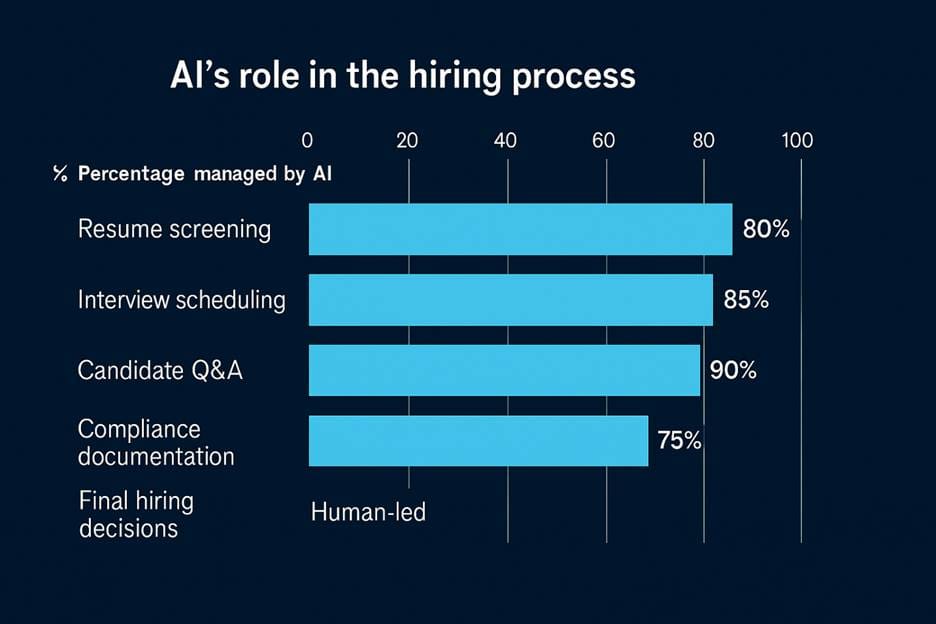
Share of Recruitment Activities Managed by AI

Share of Recruitment Activities Managed by AI (Projected)

Recruitment Strategy 2026 Recasts the Human Role: Strategic or Irrelevant

The Human Role Does Not Disappear. It Becomes Strategic or Irrelevant

When machines handle execution, humans must own judgment. Recruitment Strategy 2026 leaves no room for the traditional recruiter profile built around coordination, administration, and process management. Those tasks are now automated at scale.

What remains is the work only humans can do well — building trust with passive candidates, advising leaders on talent trade‑offs, designing roles that align capability with future business models, and interrogating AI output when it looks confident but wrong.

This shift demands an entirely new skill set. The recruiter must evolve into something broader, more adaptive, more strategically literate. A multiversed recruiter is becoming essential in talent acquisition, because versatility now shapes how organisations adapt, hire, and compete — a shift that elevates the role from process operator to strategic problem‑solver.

In my opinion, this is where many organisations will falter. Leaders assume AI fluency is the missing skill. Talent leaders, closer to the work, know the real gap is critical thinking. Humans must spot bias, detect hallucinations, and decide when to override algorithmic recommendations. Yet only a small minority of leaders believe their organisations are ready to manage hybrid human-AI teams effectively.

Managing people has always been complex. Managing people and machines together requires a new leadership approach.
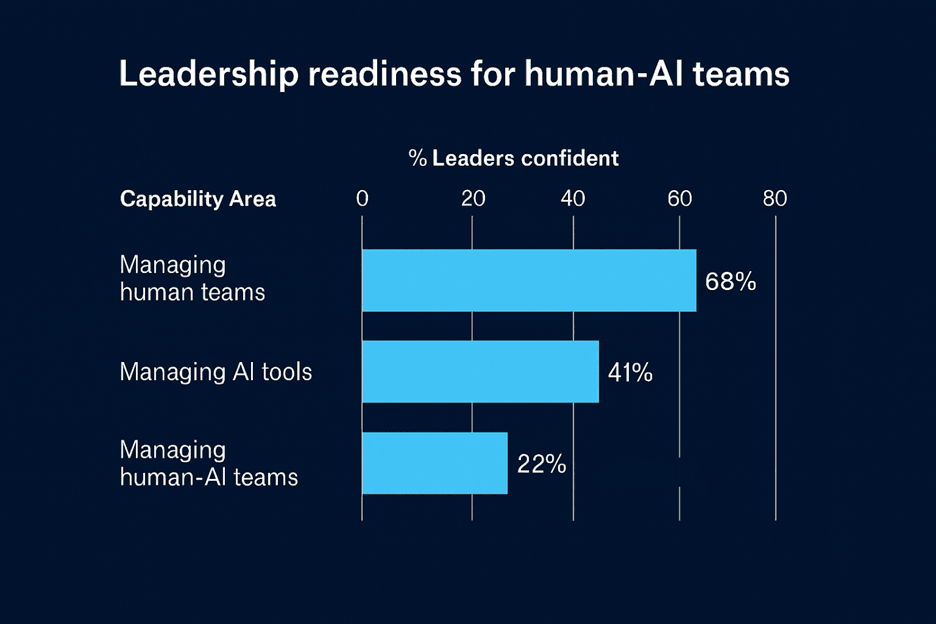
Leadership Readiness for Human-AI Teams

Leadership Readiness for Human-AI Teams

Recruitment Strategy 2026 Elevates Skills as the Backbone of Talent Strategy

Skills Replace Credentials as the Backbone of Talent Strategy

The Recruitment Strategy 2026 accelerates a shift that has been quietly building for years. Degrees, job titles, and linear career paths no longer predict performance. Skills, applied judgment, and learning velocity do.

Organisations are moving decisively toward skills-first hiring models, widening talent pools while reducing costly mis-hires. This is not ideological. It is economic. Skills-based hiring improves match quality and resilience at a time when roles evolve faster than job descriptions can keep up.

At the same time, assessment integrity is under pressure. Generative AI has made polished resumes and rehearsed interview answers universal. The signal-to-noise ratio has collapsed. Leaders must respond by redesigning assessments around lived experience, practical demonstrations, and problem-solving in context. The goal is not to ban AI use by candidates, but to test what AI cannot fake.
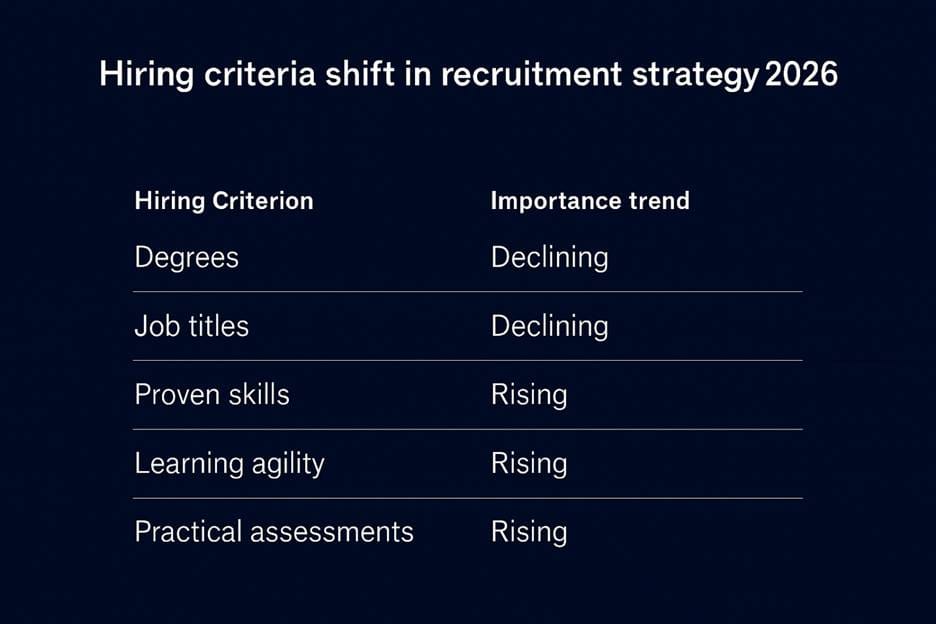
Hiring Criteria Shift in Recruitment Strategy 2026

Hiring Criteria Shift in Recruitment Strategy 2026

Recruitment Strategy 2026 Confronts the Quiet Crisis in Entry-Level Talent Pipelines

Recruitment Strategy 2026 risks solving today’s costs while creating tomorrow’s shortage.

One of the least discussed consequences of Recruitment Strategy 2026 is the erosion of entry-level roles. As organisations replace junior and back-office positions with AI to cut costs, they eliminate the training ground where future leaders learn how the organisation actually works.

This is short-term optimisation with long-term consequences. Without entry-level pathways, organisations lose institutional memory, succession depth, and cultural continuity. They are then forced into expensive external hiring for senior roles, often importing capability without context.

In my experience, leadership pipelines do not fail suddenly. They decay quietly, then collapse under pressure.
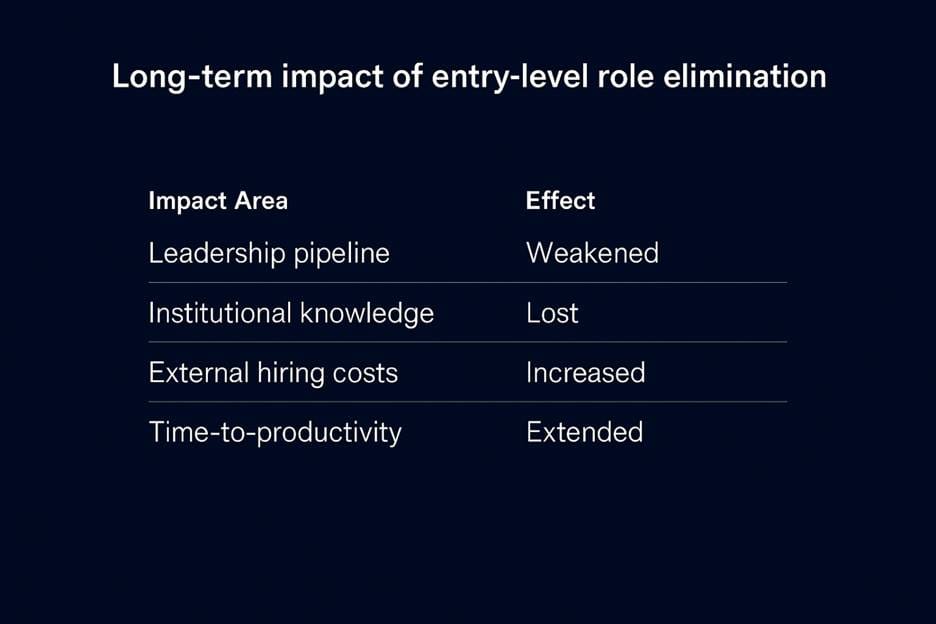
Long-Term Impact of Entry-Level Role Elimination

Long-Term Impact of Entry-Level Role Elimination

Candidate Experience Emerges as the Defining Constraint in Recruitment Strategy 2026

Recruitment Strategy 2026 treats experience as infrastructure, not branding.

In Recruitment Strategy 2026, candidate experience moves from employer branding rhetoric to operational necessity. Speed, transparency, and responsiveness now directly influence offer acceptance and talent access.

Candidates increasingly expect feedback within 48 hours. Delays are interpreted as disinterest or dysfunction. At the same time, pay transparency is becoming non-negotiable, driven by regulation and competitive pressure. Salary bands, progression frameworks, and equity disclosures are no longer optional signals of trust.

Return-to-office mandates further complicate the picture. Organisations that insist on rigidity shrink their talent pools and inflate compensation costs. Flexibility is no longer a perk. It is a market filter.
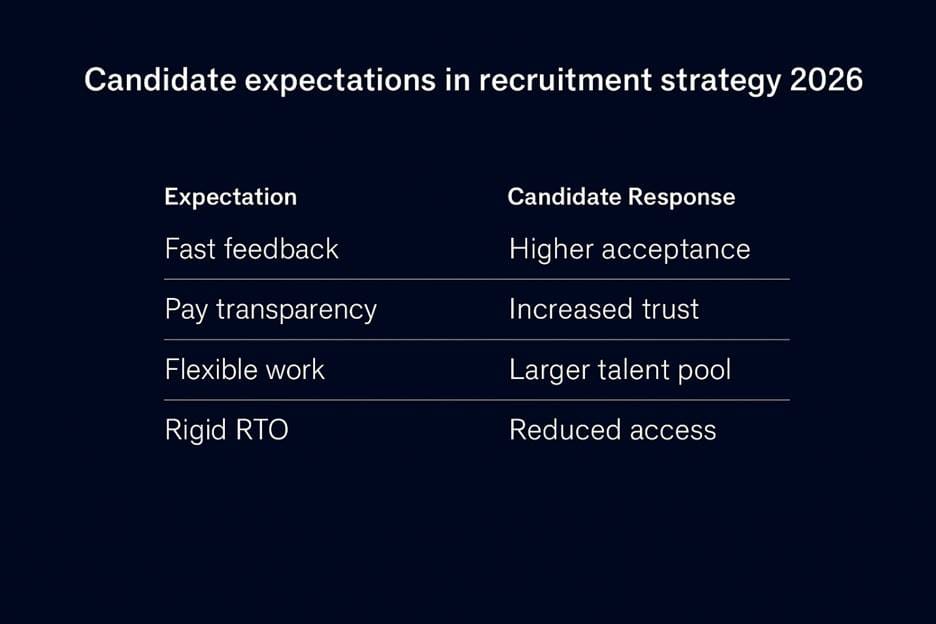
Candidate Expectations in Recruitment Strategy 2026

Candidate Expectations in Recruitment Strategy 2026

Recruitment Strategy 2026 Transforms Hiring Infrastructure with Modular Talent Models

Recruitment Strategy 2026 rewards adaptability over scale.

Economic uncertainty has exposed the inefficiency of fixed recruitment infrastructure. Recruitment Strategy 2026 favours modular models that scale capability up or down as needed. Short-term RPO partnerships, specialised external expertise, and flexible delivery models allow organisations to respond quickly without heavy capital investment.

This is not outsourcing for cost alone. It is architectural flexibility applied to talent.

Here’s What I Think

Recruitment Strategy 2026 is not about AI adoption. It is about organisational courage. Leaders must decide whether they are redesigning hiring for the future or automating the past.

AI will do the heavy lifting. Skills will replace credentials. Candidates will demand transparency and speed. The differentiator will be human judgment. Organisations that treat recruiters as strategic architects, not process managers, will win. Those that do not will move faster, cheaper, and in the wrong direction.

The future of hiring is already here. The only question left is who is willing to rebuild it.


ajay dhage

Ajay Dhage is a seasoned Talent Acquisition leader with over 20 years of experience in recruitment and workforce strategy. Currently serving as the Talent Acquisition Lead for a global Oil & Gas EPC Company in India, ajay oversees the entire talent acquisition lifecycle across diverse and complex projects, from sourcing to onboarding and aligning top talent with complex organizational goals. With a proven track record in industries such as oil and gas, EPC, and renewables, he brings a customer-focused approach and innovative mindset to every project.

Through ajayable.com, ajay aims to share insights, trends, and strategies to empower HR professionals, Organizations and recruiters to excel in a competitive talent landscape.

ajayable.com

Filed Under: Talent Acquisition Strategies Tagged With: AI recruitment, AI recruitment trends, recruitment trends, talent shortage solutions, Workforce planning

Workforce Readiness: How AI-Driven Organisations Are Redefining Hiring for the Future

December 2, 2025 by ajay dhage Leave a Comment

Workforce Readiness

The New Currency of Workforce Readiness

In a world shaped by generative AI, hiring for readiness—not résumés—will define who wins.

The drumbeat of technological change is relentless. Artificial Intelligence—especially Generative AI (GenAI)—is transforming how we work, learn, and lead. This isn’t a distant prospect; it’s already reshaping industries with an intensity rivalling the Industrial and Digital Revolutions. In this new reality, Workforce Readiness has become the defining factor that determines which organisations adapt, thrive, or fall behind.

The real question for leaders today isn’t how to fill jobs but how to ensure the workforce is truly ready for what’s next. In my experience, the answer lies in integrating modern learning trends into the very fabric of recruitment. Workforce readiness is no longer a human capital aspiration; it’s an economic imperative.

The Acceleration Imperative: Why Workforce Readiness Can’t Wait

AI is creating opportunity at record speed—but only for those equipped to harness it.

The 2025 employment landscape is defined by unprecedented dynamism. As AI, robotics, and automation converge, they’re not just reshaping jobs —they’re redefining value. The potential economic uplift from AI is estimated at $15.7 trillion by 2030, but realising that promise depends on one thing: how ready people are to work alongside intelligent machines.

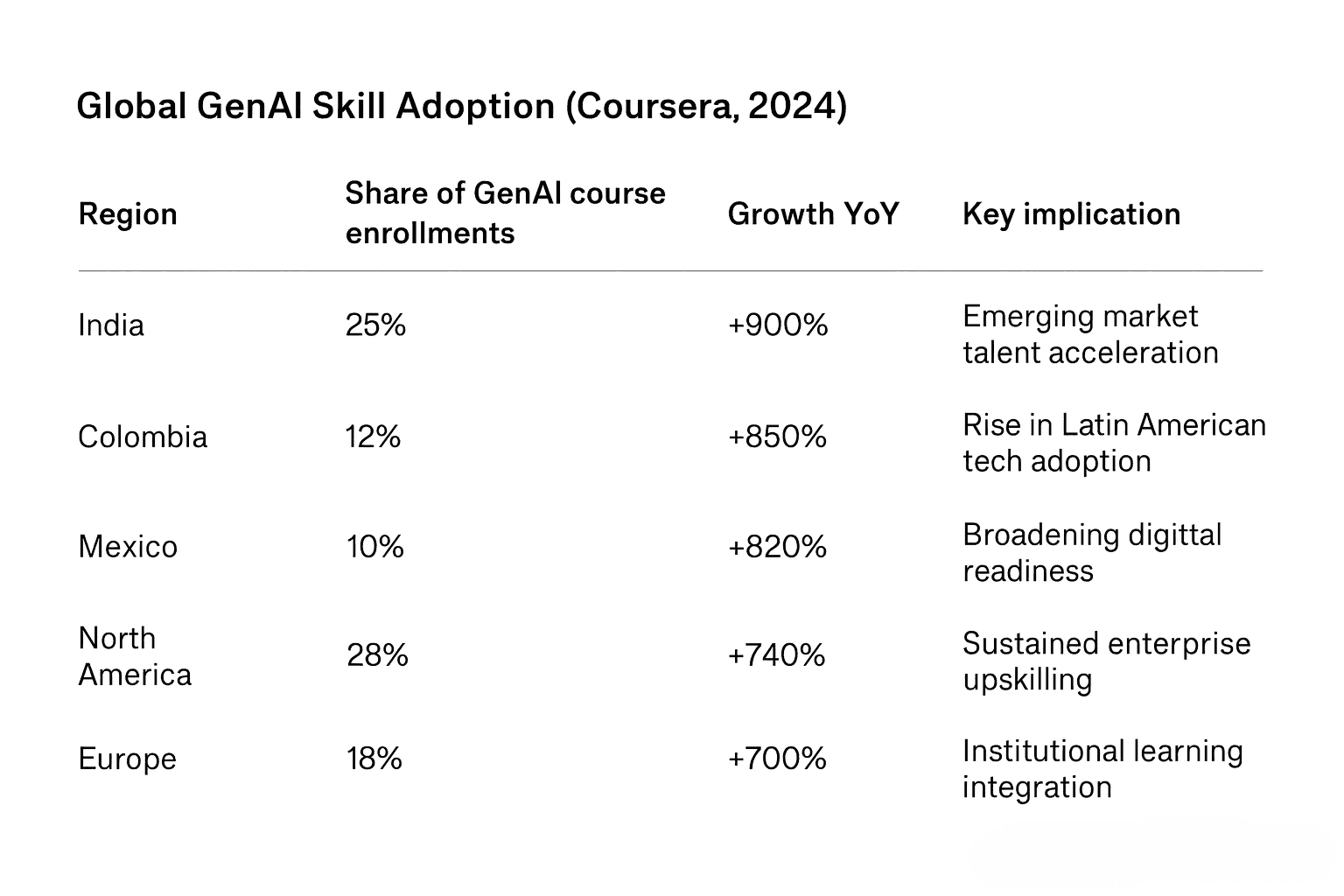
According to Coursera, GenAI has become the fastest-growing skill among enterprise learners, showing an 866% year-over-year spike in course enrollments. This isn’t limited to Silicon Valley—half of these learners are in emerging economies like India, Colombia, and Mexico.

That global diffusion signals a power shift: talent globalisation through learning. Readiness now transcends geography.

Global AI skill adoption

The Learning Revolution: How Skill Trends Are Redefining Readiness

The skills defining workforce readiness in 2025 blend technology, risk literacy, and communication mastery.

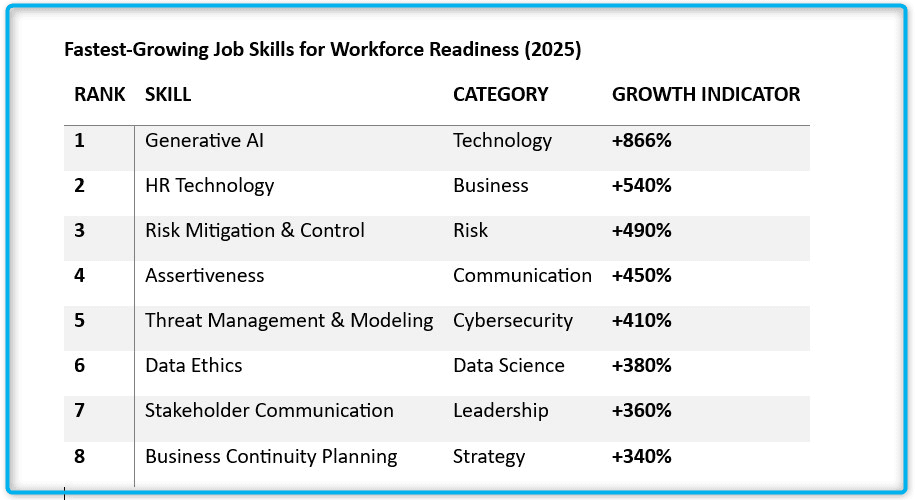
Coursera’s data paints a revealing picture of what readiness looks like. The top skills of 2025 are led by Generative AI, followed by HR technology, risk mitigation and control, assertiveness, and threat management.

Beyond those, emerging must-haves include incident management, stakeholder communication, and data ethics—a mix that captures both the digital and human sides of the future workplace.

Fastest-Growing Job Skills for Workforce Readiness (2025)

Fastest-growing job skills for workforce readiness

What fascinates me most is the divergence between learner groups:

  • Employees seek productivity and innovation—taking courses like “Generative AI for Everyone.”
  • Students focus on theoretical AI foundations, preparing for long-term technical careers.
  • Job seekers chase applied machine learning and reinforcement learning to meet immediate job-market demand.

Different paths, same goal: readiness.

From Learning to Hiring: Integrating Skill Signals into Recruitment

The smartest companies now hire for potential, not pedigree.

This is where the readiness revolution meets recruitment strategy. Traditional hiring models—based on credentials and past experience—are giving way to skills-based hiring and learning agility assessments.

By 2030, 48% of employers plan to use direct skills assessments, compared to 43% still requiring degrees. This signals a decisive shift toward evaluating what people can do rather than what they’ve done.

Organisations that embed learning trends into hiring gain a sharper lens on future performance. Here’s how leaders are operationalising that shift:

  • Skills-Based Hiring: Dropping degree requirements to evaluate candidates by demonstrated skills. Adoption rates already exceed 30% in India and 34% in South Africa—well above the global average.
  • Evaluating Learning Mindset: Asking candidates what they’ve learned lately—through courses, projects, or certifications—signals readiness and adaptability.
  • Targeted Recruitment by Skill Trend: Actively sourcing for high-growth areas like GenAI, cybersecurity, and data ethics.
  • Learning Platform Partnerships: Collaborating with providers like Coursera to map skill trends and identify talent pipelines early.

This alignment transforms recruitment from a static process into a living readiness ecosystem.

Overcoming Barriers: Closing the Workforce Readiness Gap

Readiness demands culture change, not just training budgets.

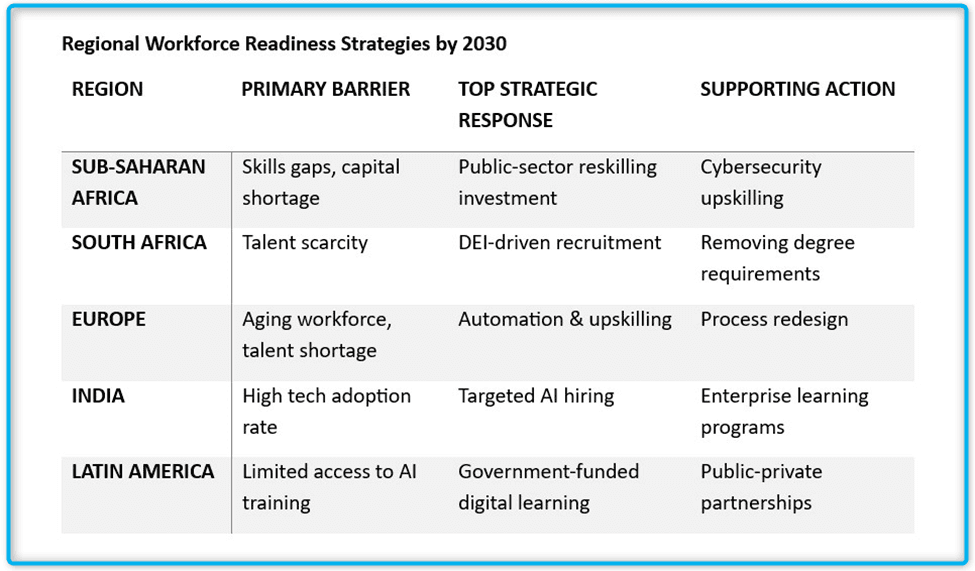
Despite progress, many organisations face the same obstacles: skills gaps, resistance to change, and limited investment. Globally, leaders are tackling these through four major strategies—reskilling, targeted hiring, DEI expansion, and cross-border mobility.

Regional Workforce Readiness Strategies by 203

Regional Workforce Readiness Strategies by 2030

No two regions face identical readiness challenges—but all share one truth: culture eats strategy when learning stops.

To thrive, organisations must normalise upskilling as part of work itself, not as a remedial fix.

Human + Machine: The Future Frontier of Workforce Readiness

AI won’t replace people—but people who embrace AI will replace those who don’t.

The future of hiring lies at the intersection of human capability and machine intelligence. GenAI will augment far more jobs than it replaces, but this augmentation demands new literacy.

Employers are already investing in prompt-writing and AI collaboration skills—areas where human creativity and contextual reasoning remain irreplaceable.

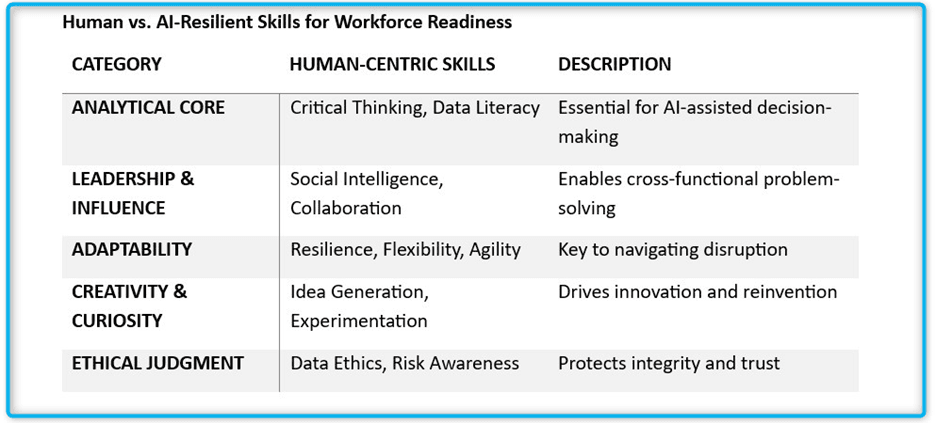
In my opinion, the most valuable workers of the next decade will be hybrids: analytically strong, emotionally intelligent, and endlessly curious.

Human vs. AI-Resilient Skills for Workforce Readiness

Human vs. AI-Resilient Skills for Workforce Readiness

These skills are the connective tissue of workforce readiness—the traits AI can’t mimic but depends on to succeed.

Here’s What I Think

The divide between learning and hiring is collapsing—and that’s a good thing.

In my experience, the future belongs to organisations that stop hiring just for talent and start hiring for learning. Tomorrow’s most valuable employees won’t just fit a role—they’ll grow it.

That’s why I believe in reimagining hiring through what I call “Learn-to-Earn” interviews. Instead of traditional Q&A, candidates could complete short, role-relevant learning modules—say, a 90-minute course on prompt engineering or data ethics—and present what they learned. Their curiosity, adaptability, and speed of insight become part of the evaluation.

I also advocate for Reverse Mentoring programs focused on AI literacy—where digital natives mentor senior leaders on emerging tools. This bridges generations and accelerates readiness.

Ultimately, workforce readiness isn’t a one-time goal. It’s a living capability—a measure of how fast organisations learn, unlearn, and evolve.
Recruitment, in that context, becomes not just about filling roles but about building resilience.

And in a world where AI is rewriting every playbook, resilience is the only skill that never goes out of date.


Sources of Insights

  1. World Economic Forum. (2025). The Future of Jobs Report 2025.
  2. The Global Skills Report – Coursera

ajay dhage

Ajay Dhage is a seasoned Talent Acquisition leader with over 20 years of experience in recruitment and workforce strategy. Currently serving as the Talent Acquisition Lead for a global Oil & Gas EPC Company in India, ajay oversees the entire talent acquisition lifecycle across diverse and complex projects, from sourcing to onboarding and aligning top talent with complex organizational goals. With a proven track record in industries such as oil and gas, EPC, and renewables, he brings a customer-focused approach and innovative mindset to every project.

Through ajayable.com, ajay aims to share insights, trends, and strategies to empower HR professionals, Organizations and recruiters to excel in a competitive talent landscape.

ajayable.com

Filed Under: Leadership & Workforce Strategy Tagged With: recruitment trends, talent shortage solutions, Workforce planning

Primary Sidebar

Latest Reads

  • The Hollow Organisation: Why 2026 Cost-Cutting Triggers a Leadership Pipeline Crisis by 2030
  • Recruitment Strategy 2026: Why AI, Skills, and Human Judgment Will Redefine Hiring
  • Workforce Readiness: How AI-Driven Organisations Are Redefining Hiring for the Future
  • Skilled Trades Innovators: The Great Career Pivot and What Leaders Must Do Next
  • Degrees Without Direction: Solving the India Career Guidance Crisis

What Readers Say

  1. ajay dhage on Talent Wars: Winning the Battle for Top Employees
  2. Raosaheb P Pandit on Talent Wars: Winning the Battle for Top Employees
  3. Vipul Patel on How Evolving Degree Value is Redefining Career Pathways
  4. Deep Punkar on How Evolving Degree Value is Redefining Career Pathways
  5. Malini S on Gen Z Employability in India: Decoding Why Indian Companies Are Hesitant to Hire

Explore Topics

  • AI & Automation in Recruitment
  • AI & Automation in TA
  • AI and Automation
  • AI in Recruitment
  • Campus & Early Careers
  • Career Development for HR Professionals
  • Future of Work
  • Industry Trends
  • Leadership & Talent Strategy
  • Leadership & Workforce Strategy
  • Recruitment Market Trends
  • Talent Acquisition Strategies
  • Technical HR

Archives

  • January 2026
  • December 2025
  • November 2025
  • October 2025
  • September 2025
  • June 2025
  • May 2025
  • April 2025
  • March 2025
  • February 2025
  • January 2025
  • December 2024

Copyright © 2026 · News Pro on Genesis Framework · WordPress · Log in